8 Best Kitchen Hygiene Tips to Keep Your Family Safe
“Your kitchen should be a place of nourishment, not risk.”
An aesthetically pleasing kitchen is fine, but it is worthless if it is not clean, as it is directly tied to your family’s health. It is one of the most vulnerable spaces for contamination.
Be it raw food handling, surfaces, or utensils, even a small lapse can lead to the spread of bacteria and foodborne illnesses.
As imperative as it is to keep the kitchen clean, it often feels overwhelming. However, the truth is that it doesn’t require hard work, but smart work. Maintaining high-quality kitchen standards isn’t as complicated as it seems. All it requires is consistency, awareness, and the right tools.
Here are 8 practical kitchen hygiene tips that are easier to follow and significantly reduce health risks, creating a safer cooking environment for your family.
Kitchen Hygiene Tips
1. Maintaining Hand Hygiene
- Before cooking
- After handling raw ingredients
- After touching your phone
- While switching tasks
- After touching your hair, face, or clothes
- After sneezing, coughing, or blowing your nose
2. Preventing Cross-Contamination
Also, ensure you clean between fingers and under nails too for at least 20 seconds with soap and water.
If you’re washing your hands but not preventing cross-contamination, it isn’t going to turn out well. Imagine the bacteria transfer from raw food to ready-to-eat items just because you overlooked a few simple steps.
- Keep raw and cooked food separate
- Use separate chopping boards and knives for raw and cooked foods
- Do not put cooked food on a plate that held raw meat
- Do not use deeply scratched or worn cutting boards
- Do not wash raw meat around the kitchen sink and countertops
- Wipe surfaces before and after use
Following these simple steps can ensure food safety, preventing allergies and the chances of foodborne infections.
3. Disinfecting Surfaces
If not cleaned, kitchen surfaces can hold hidden bacteria, mold, and viruses. Making it a daily habit removes spills and grease, which helps eliminate unhygienic conditions. Moreover, simply wiping the shelves is not enough. Instead, disinfect thoroughly, especially:
- Countertops
- Sinks
- Cabinet handles
- Switch board
- Appliance buttons
- Refrigerator handles
But most disinfectants contain alcohol that might not be good for these surfaces. This is where you need to switch to HOCL disinfectant, which is effective against pathogens while being safe and alcohol-free for food-contact surfaces
4. Washing Eatables Thoroughly
Needless to say, the vegetables you buy from the market carry dirt, pesticides, and microbes from farms and transportation. This can be especially harmful when it comes to preparing meat, raw fruit, and vegetables.
- Rinse under cold running water with a gentle finger scrub
- Soak leafy greens and broccoli in diluted HOCl disinfectant to remove hidden debris
- Wash fruits before eating, not while storing
- Do not use soap or detergents
Following these steps helps reduce microbial contamination without compromising food safety. Moreover, this overlooked step prevents the accidental ingestion of harmful pathogens.
5. Handling Kitchen Clothes
Did you know that your cleaning tools are often dirtier than your hands? Likewise, the sponges and dishcloths are often the dirtiest items in the kitchen. They create a breeding ground for bacteria by trapping moisture and food particles.
- Replace sponges every 1–2 weeks
- Wash dishcloths daily in hot water
- Do not use wet clothes on the kitchen slab
- Let them dry completely between uses
For a truly clean kitchen, you need to start disinfecting your cleaning tools too. Otherwise, your dirty sponge and clothes can cancel out all your cleaning efforts.
6. Cleaning Appliances
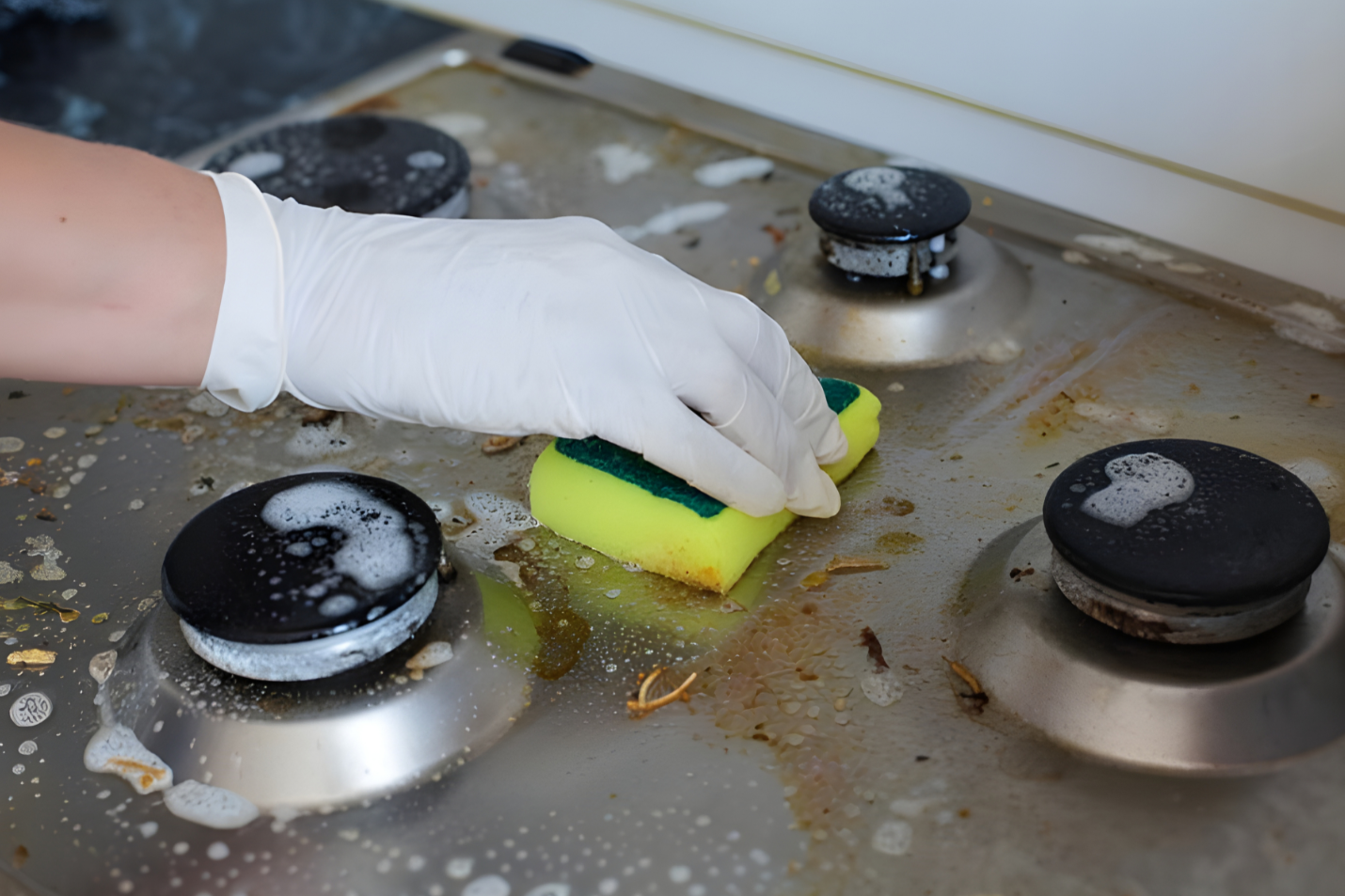
In terms of food safety, kitchen appliances tend to accumulate grease, food residue, and bacteria over time. Therefore, it is essential to clean the following thoroughly, as they are a part of everyday cooking:
- Microwave interiors
- Mixer jars
- Refrigerator shelves
- Stove knobs and burners
Pay special attention to the corners and crevices of these appliances. Besides healthy food, it also improves appliance efficiency, prevents expensive repairs, and extends its lifespan
7. Waste Disposal
We all know how odor, pests, and bacteria build up around garbage. The kitchen is no exception. This makes garbage handling in the kitchen more important since it can affect your food safety.
- Use dustbins with a tight lid fitting
- Empty the kitchen garbage daily
- Use different bins for dry and wet waste
- Clean and disinfect dustbins daily
- Don’t let the waste sit overnight
You can also use the organic waste as a nutrient-rich soil for your home plants. In case you missed out on throwing out the waste, disinfect your kitchen thoroughly.
8. Maintaining Personal Hygiene
While you keep your kitchen clean and disinfected, don’t forget to maintain your hygiene too. It prevents the transfer of harmful bacteria in any possible way. Before you start cooking, ensure the following:
- Wash your hands after each step
- Keep nails trimmed
- Wear an apron
- Do not cook if you are sick
- Do not use a phone or other personal devices while cooking
- Do not touch your hair and skin
Not only do these protect your food from contamination, but they also reflect high hygiene standards that are essential for personal wellness as well.
Takeaway
A hygienic kitchen is about mindful habits and consistent effort. By following these basic hygiene tips daily, you’re not only keeping the kitchen clean but protecting your family’s health. You might find it difficult to build first. But once you do, it becomes a part of your life. And you don’t want to visit doctors for foodborne infections, do you?