What Did India Leave Behind in 1947 and What Did It Keep?
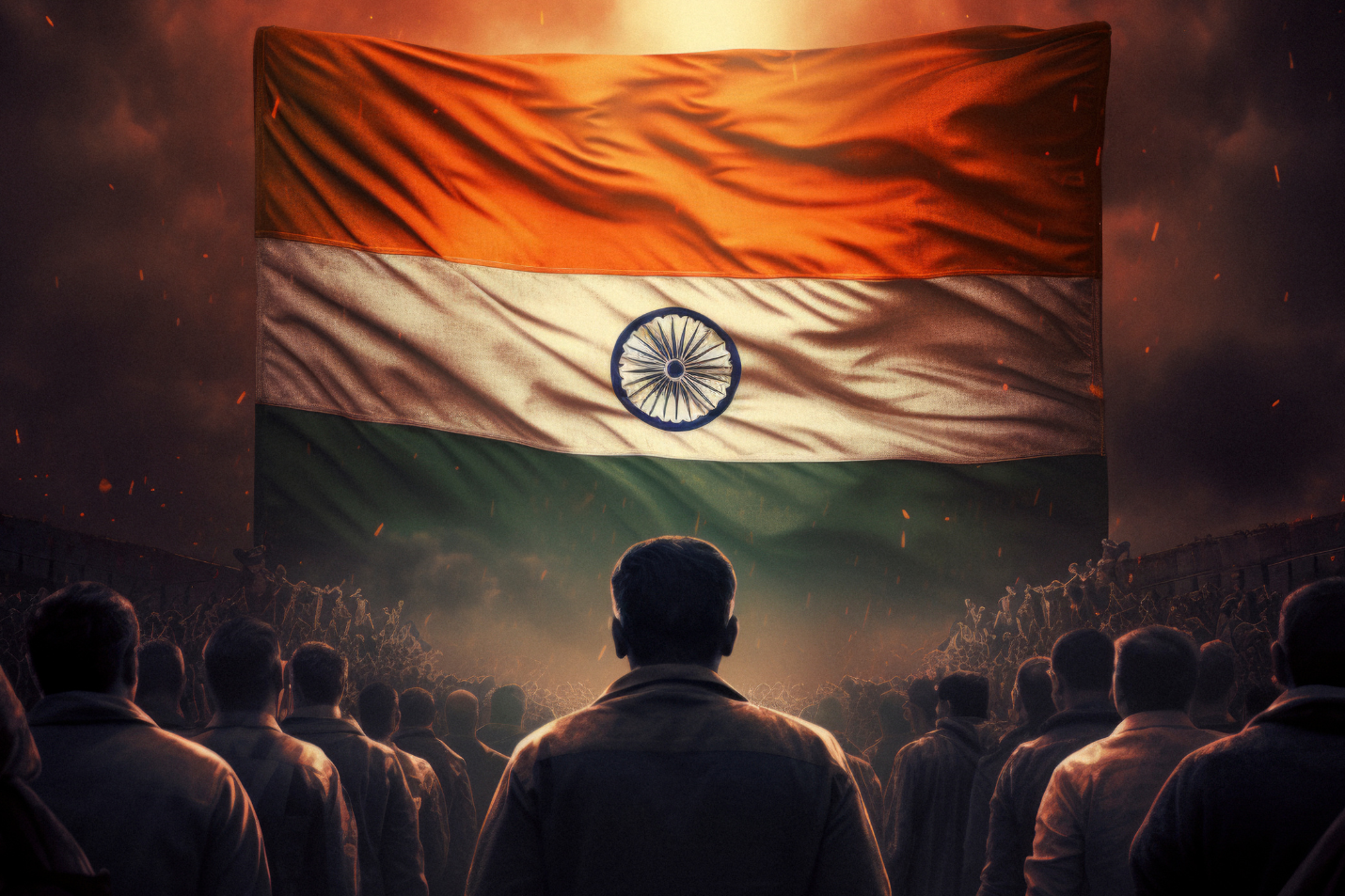
On 15th August 1947, India achieved its independence after two centuries of domination by the British. Independence was not just a political operation but also a social, cultural, economic, and administrative revolution.
It marked a crucial chapter in Indian history. The institutions, governance, and administrative bodies that define India today began to take shape then. Examining what India gained and retained at independence reveals the balance between change and continuity and helps explain the emergence and development of modern India.
The Midnight of Independence
British rule ended, and two independent nations, India and Pakistan, were born under the British Indian Independence Act of 1947.
Independence was the dawn of freedom and self-rule, and the Partition was one of the most important events in the history of South Asia. After independence, the political change led to the establishment of a new government, national identities, and other significant social and demographic changes.
What India Left Behind in 1947
With Independence, India witnessed the end of some of the colonial institutions and practices that had shaped life during the years of British rule. Many of the changes were gradual in the years that followed, but the country shifted away from systems which catered to imperial interests to systems which catered to national development, democratic government and social justice.
Colonial Rule and British Political Control
There was a transfer of political power from the British Crown to the Indian leaders, which allowed Indians to set up their democratic institutions, draft their own Constitution and decide their own foreign and domestic policies. This shift helped to establish a free republic with representative government.
Foreign Economic Exploitation
The economy at the time of Independence was geared largely towards the British goals. Colonial policies had diverted agricultural output and raw materials towards the imperial market and, at the same time, had imposed heavy taxes, making the local industries and agriculture vulnerable. Due to the transfer of a vast amount of wealth abroad, there was a scarcity of industrial capacity and widespread poverty in the country, and so with the onset of independent India, it was decided to pursue planned economic development with emphasis on self-reliance, industrialisation, and expansion of infrastructure.
Colonial Laws and Policies
The administrative and legal systems established under British rule still existed after Independence, but have been modified over time to meet the demands of a democratic state. The Constitution and legal provisions were questioned as to their legality, including the colonial-era sedition laws, and the elimination of zamindars aimed for an increase in agricultural equity and the decrease of feudal land ownership. Administrative reform was modernised, and land reform was seen as a way in which to achieve a more equitable distribution of resources and enhance the development of rural areas.
The Princely State System
The Indian subcontinent at the time of independence comprised over 560 princely states, which were not directly ruled by the British and had variable levels of autonomy under British suzerainty. These states would play a significant part in the making of the newly independent nation of India. One of India’s first political achievements would be the incorporation of these states into India. The government managed to bring these territories together through negotiation, diplomacy, and, in a few cases, military force, fostering national unity and establishing a more unified federal system.
Social Divisions
The British colonial leadership often used laws that emphasised social and religious differences to maintain political control. “Divide and rule” practices led to conflict between groups, administrative isolation, and increased tensions between specific institutions. Although India has embraced egalitarian and secular governance since independence, managing the long-term socio-political consequences of this divide has been a key part of the state-building process.
What India Kept After Independence
Parliamentary Democracy
India, after achieving independence, has implemented the Westminster-style parliamentary democracy, which has been moulded according to the requirements of a sovereign republic. There are provisions for elected members in this system, the Prime Minister as the Head of Government, and two houses of Parliament – Lok Sabha and Rajya Sabha.
Civil Services
India has maintained its structure of administration that was developed during the colonial era, by changing the Indian Civil Service (ICS) into the Indian Administrative Service (IAS), and other All India Services. It helped in the process of attaining freedom and developing a bureaucratic system that would help in implementing governmental policies and administration.
Judicial System
The Indian nation, after gaining independence, maintained the common law system that it had received from the British but transformed it according to its Constitution. With the creation of the Supreme Court and the working of the High Courts, there was an independent judicial system with the power of interpreting laws and protecting constitutional rights.
Railways and Public Infrastructure
One of India’s most important national resources was the large railway network that had been constructed in the days of colonial rule. In addition to increasing connectivity through railroads, the government modernised transport systems and kept running various other services such as posts, ports, and other infrastructural services.
English as Administrative Language
After independence, the English language played an important role in governance along with Indian languages. It has been widely used in official administration, higher education, the judiciary and legal affairs, facilitating communication among the diverse population of India. Its sustained use has also strengthened India’s participation in global international relations and global trade.
Educational Institutions
Though many institutions of learning were already present before the period of independence, India further enhanced the scope of higher education by establishing new scientific research establishments, technical schools, and professional institutions to generate innovations, enhancing administrative capability, and developing a skilled labour force for the betterment of the nation.
India’s Cultural Heritage That Remained Unchanged
India has not forgotten its traditional culture, which has always formed a part of its national identity. Today, the languages, festivals, ancient writings, and classical artwork are still an important part of everyday Indian culture. The strong principles of spirituality and family union are what make up the core identity of the Indians. India’s traditional forms of health and wellness, yoga and Ayurveda, are an essential component of its culture, and its wide range of culture remains India’s prime asset.
How the 1947 Legacy Still Shapes Modern India
The story of 1947 continues to shape India’s present-day decisions. In a world of rapidly advancing technology, digital governance, international relations, and economic reform, India keeps moving ahead while building upon the traditions established since independence. The country’s success in modernisation without forgetting its constitutional and national identity speaks volumes about the significance of its independence story. On the way to becoming one of the world’s leading economies, India remembers that true progress is attained through innovative solutions and adherence to traditional principles.